Score Your Common App Essay Out of 40
哈佛录取文书满分40分,你的能打多少?
ED season is over and RD has started in earnest. A colleague — a Harvard graduate whom I consider the best Common App essay reader I know — built a GPT that scores 650-word main essays against a rubric calibrated to Harvard's publicly released admitted essays. This post explains how it works and what to do with the output.
How the rubric was built
Harvard periodically releases sets of admitted student essays. My colleague used these as the benchmark for a score of 40, then assembled additional essays and had a small panel of Harvard-trained essay readers score each one on five dimensions. The scored set was fed into a GPT to learn the rubric, and the system was calibrated to reproduce those expert scores on new essays. The result is a fine-tuned GPT that scores any essay you paste in.
Two design choices worth noting. First, it does not send your essay to an API — your work stays yours. Second, the training set is small and skewed toward strong essays (poor ones were simply unavailable), so raw scores run high. A 33 does not mean the essay is ready; a 35+ is genuinely competitive by our observed benchmarks. This cycle our students' essays clustered between 33 and 36, and that range tracked well against admissions outcomes at top-20 schools.
Open the GPT — Read Rate chatgpt.com · paste your 650-word essay to score itHow to use it
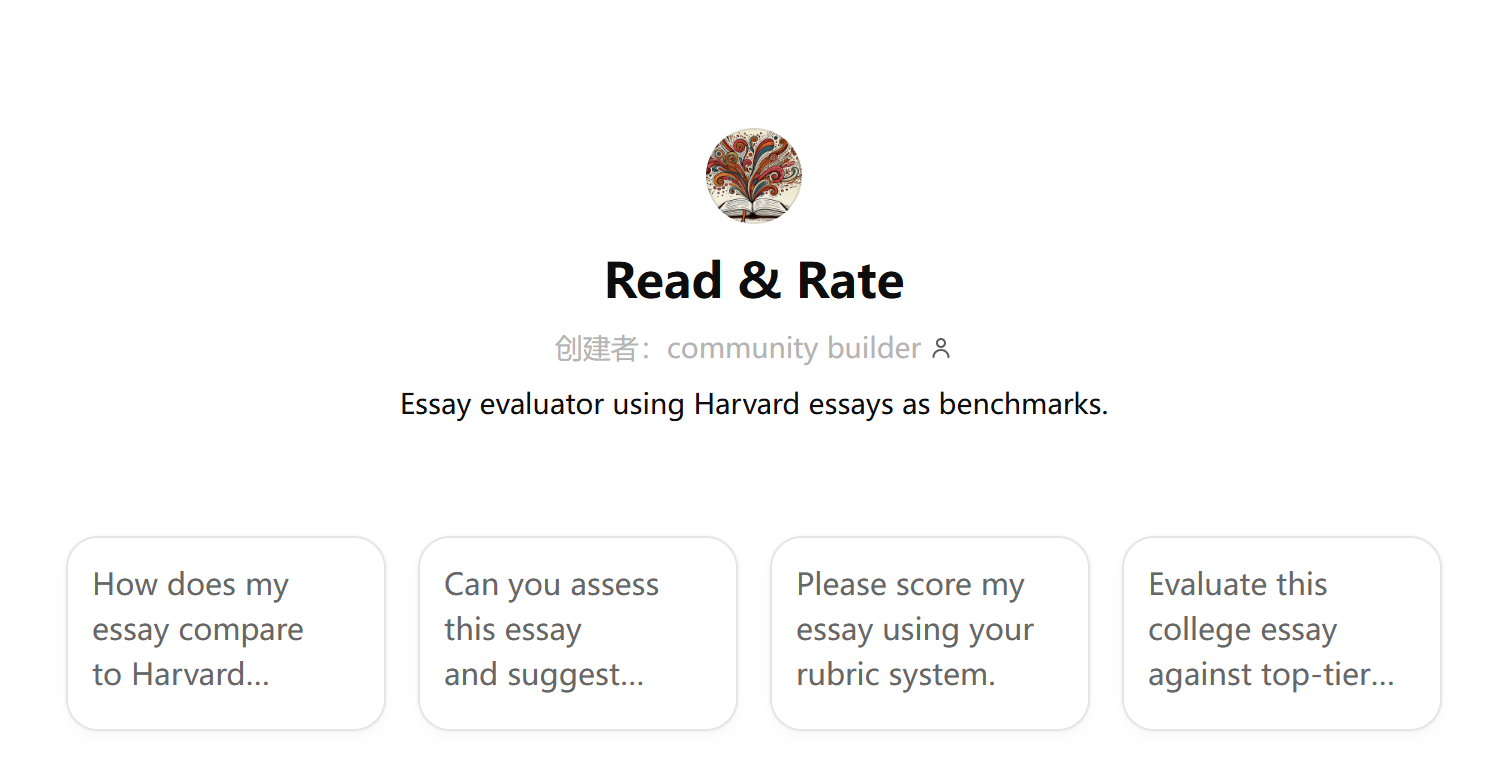
Step 1 — open the GPT and paste your essay
- Log into ChatGPT and open the link above (or search "Read Rate").
- Copy-paste your 650-word essay and press enter.
- Read the summary first. If the AI's summary does not match what you intended to say, that is the most important signal in the whole report. Fix the communication problem before you fix anything else.

Example: summary for a Duke-admitted essay — the first thing to verify
Reading the five-dimension score
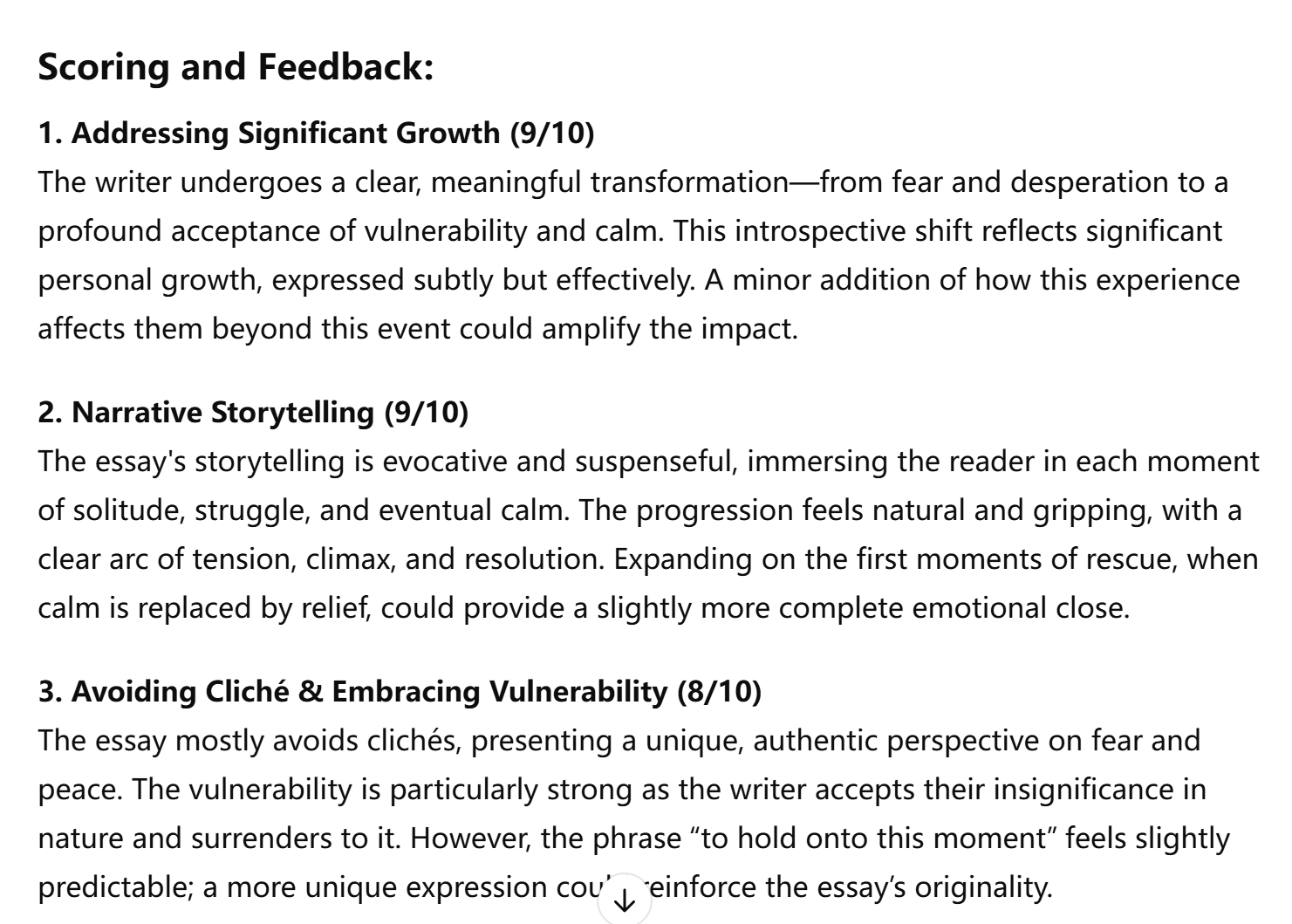
The five-dimension breakdown — 5 or 10 per dimension
Each dimension is marked 5 or 10. The feedback under each dimension is where the useful information lives — the AI identifies specific strengths and specific weaknesses. Treat it as one informed reader's reaction, not as a grade. Some of it will reflect the training data's biases rather than universal admissions wisdom, so read critically.
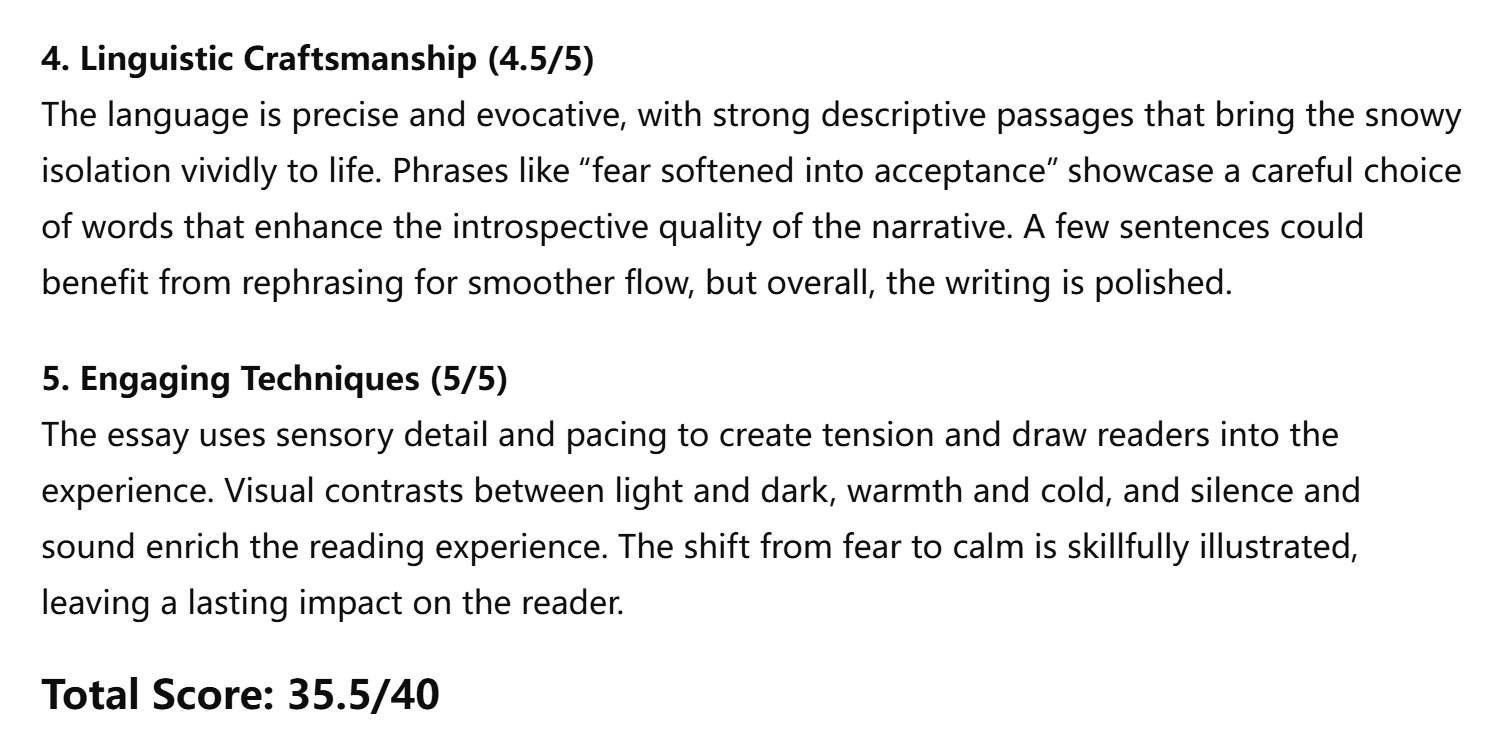
Suggested improvements and comparable essays to study
Because it has been trained on Harvard essays, it ends by suggesting which published essays your draft resembles and where to find them. That comparison is useful for understanding your essay's positioning — not as a target to imitate.
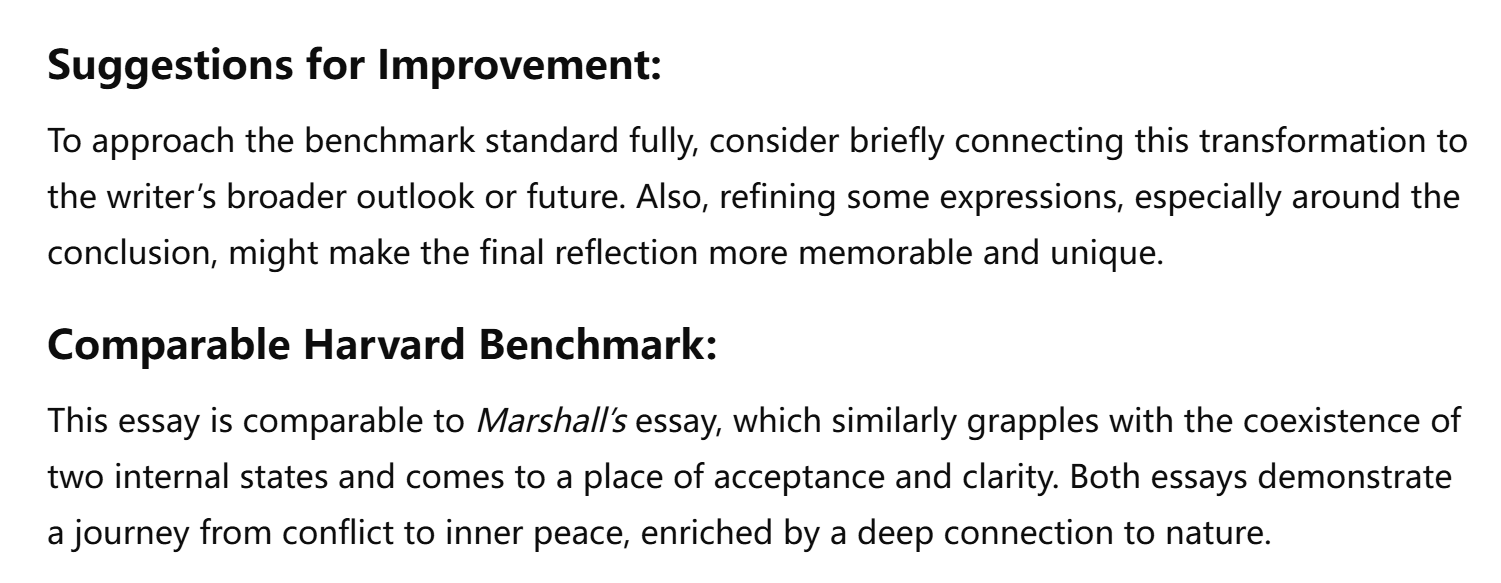
Overall score — calibrated against Harvard-released essays as 40/40
What the score means in practice
This GPT scores only the Common App main essay (650 words). Paste anything else — a UK personal statement, a supplemental essay, a news article — and it will score it, but the output means nothing. Below 30 indicates structural problems; 33–34 is a working draft; 35+ is strong by our observed benchmarks. But remember the training set has almost no weak essays, so the floor is artificially raised. A 30 here can still mean meaningful work remains.