How to Test Whether Your College Essay Has Visual Specificity
美本文书如何确保其具有画面感?
The test is simple: drop your essay into DALL·E 3, paragraph by paragraph. If the images come back vivid and specific — if the AI can clearly render what you wrote — then the admissions officer reading it will be able to, too. If the images are generic or vague, so is your prose.
The workflow is three steps:
- Open GPT-4 with the DALL·E 3 plugin.
- Give it the essay context and the task.
- Specify a visual style (cartoon, sketch, watercolour — pick one and stay consistent).
Generating one composite image for the whole essay does not work well. The example below feeds one paragraph at a time, in cartoon style, using the Harvard "Hands" essay — one of the most well-known US admissions essays of recent years.
Paragraph 1
Mom always told me that if my hands were smooth and unblemished nobody would be able to tell my age. She wore rings and gloves to cover up the premature wrinkles from her time as a waitress in high school and the scars on her fingers from her first four years in America as a seamstress.
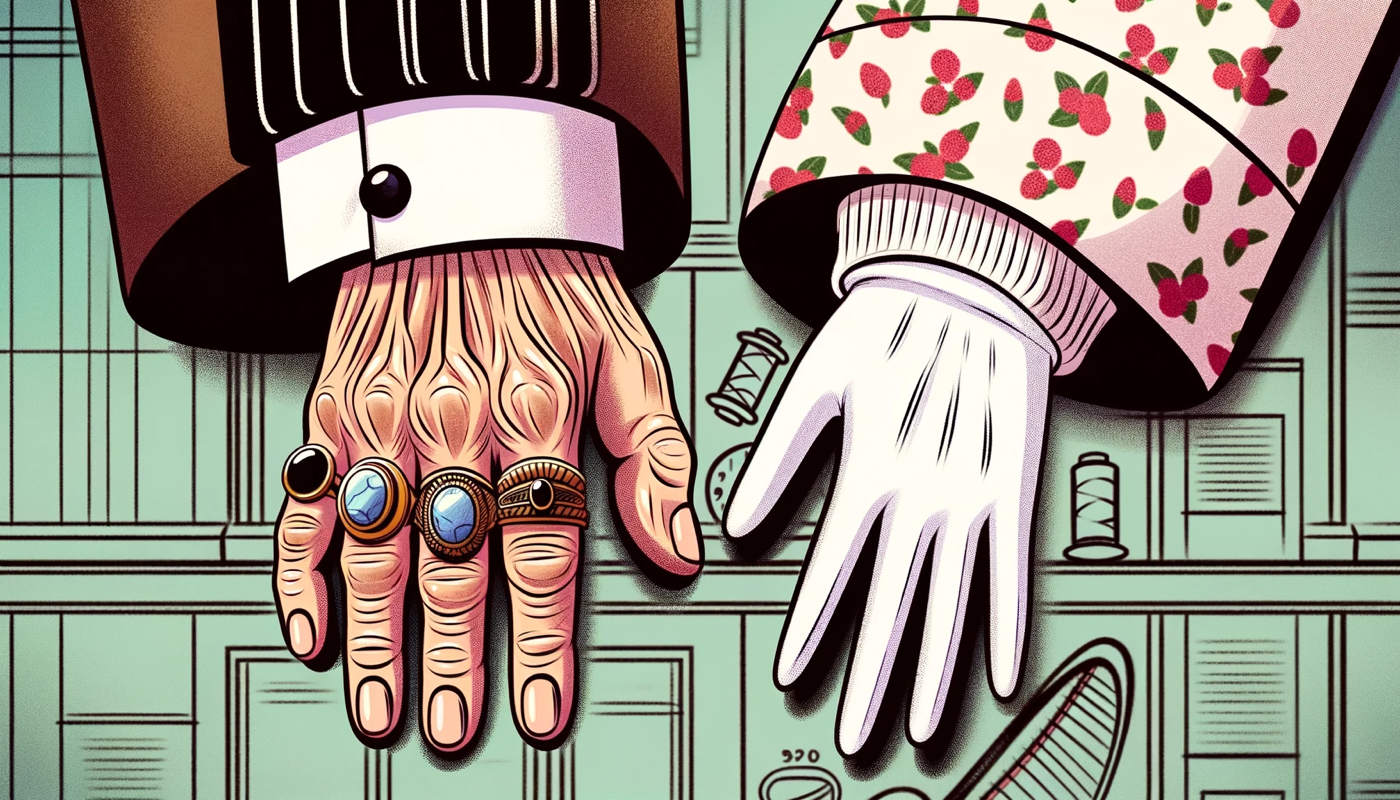
DALL·E 3 output — rings and gloves concealing a waitress's worn hands
Paragraph 2
Try as she might, no amount of jewelry or hand cream could erase those markings. But I envied her imperfections: Mom's weathered hands spoke volumes about her strength, selflessness and love. Whenever my family gathered at the dinner table, I would steal glances at their hands. Each wrinkle and scar read like a chapter of a life well lived: a life full of purpose. When I looked at my smooth knuckles and babylike palms, I wondered when I would receive markings that told my story.
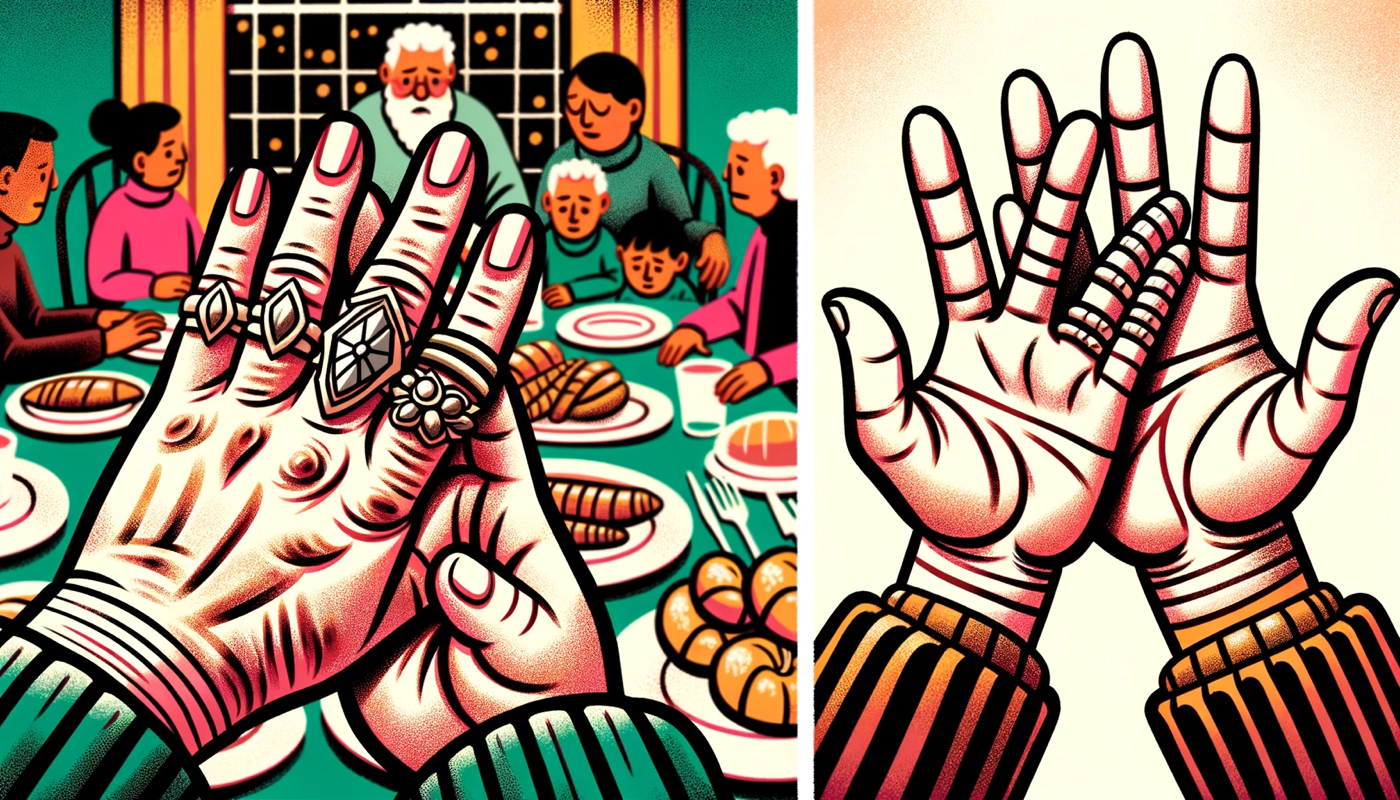
DALL·E 3 output — stealing glances at hands around the dinner table
Paragraph 3
When Dad squeezed my hand as we crossed the street, I tried to place the sharp ridges and rock-hard calluses that dug into my soft skin. Did they come from summers in Montenegro, gripping the worn handle of the scythe to cut hay? Were they caused by heavy tiles nicking his palms during the kitchen renovations that paid for my babysitters?
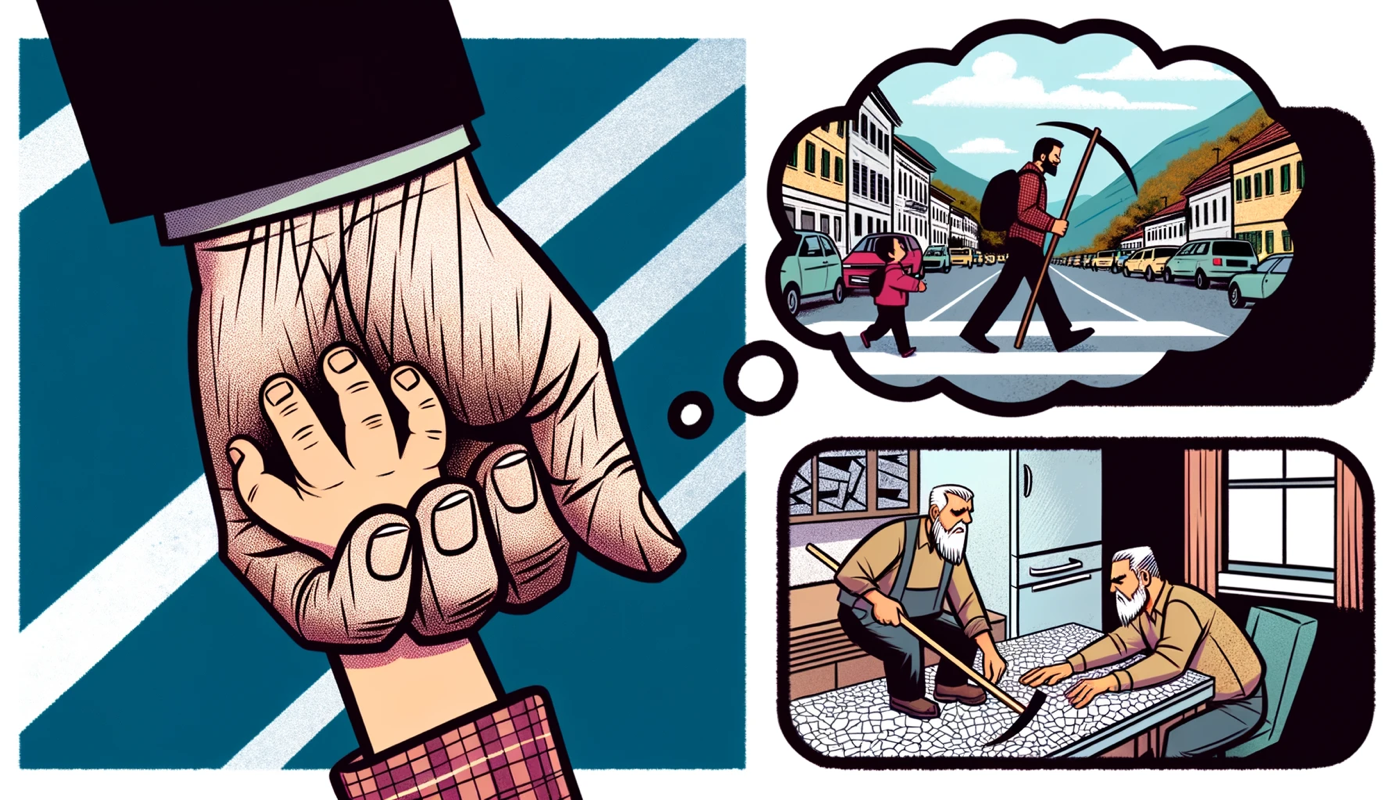
DALL·E 3 output — father gripping a worn scythe handle in a Montenegrin field
Paragraph 4
During summers in Pljevlja in Montenegro, I would watch Grandma's trembling hands as she kneaded each piece of burek. What initially seemed like splotches of flour were actually burn scars from 70 years of cooking. Perhaps they came from adding one too many coals to the furnace or accidentally lifting pots out of the oven with her bare hands.
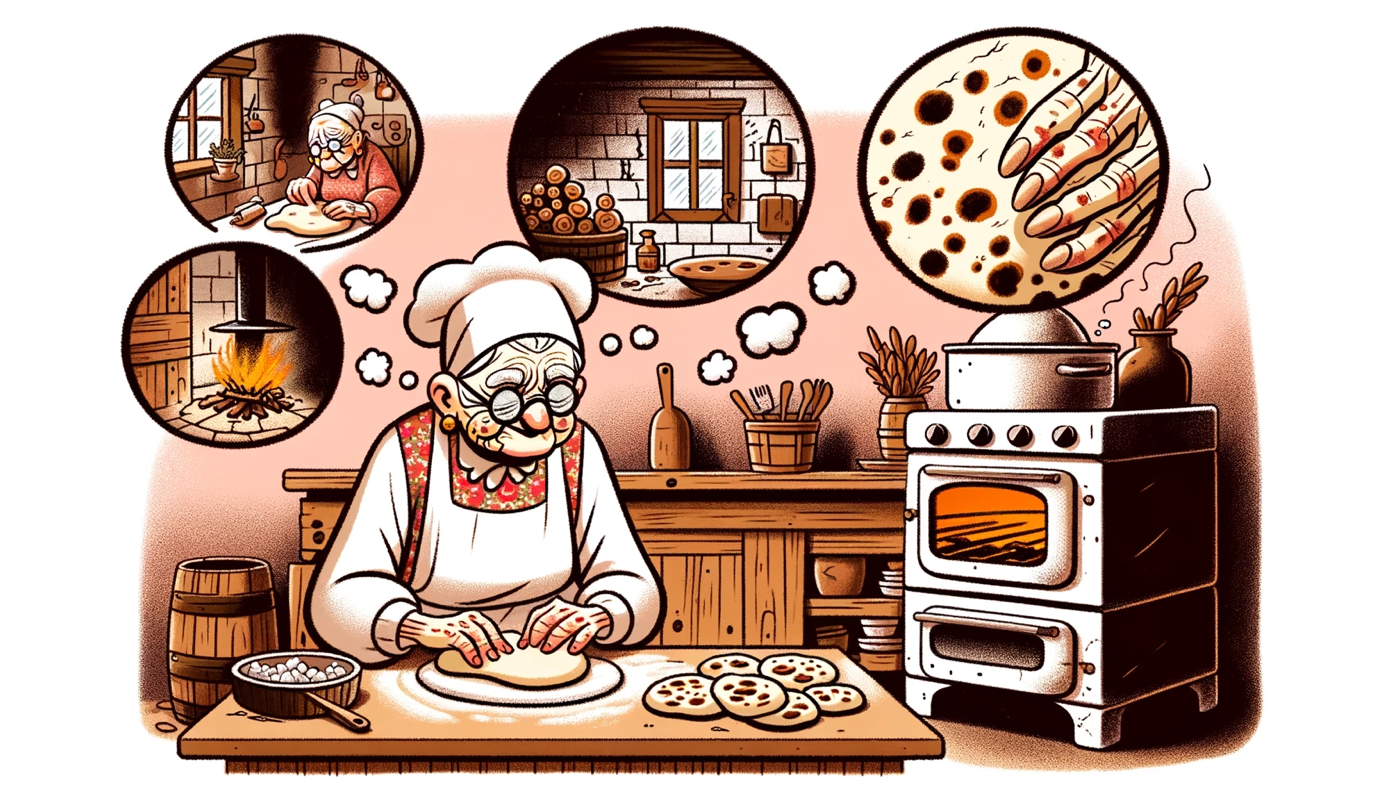
DALL·E 3 output — grandmother's trembling, scarred hands shaping burek dough
Paragraph 5
Their hands symbolized their love and sacrifice for family. But my unblemished hands signified nothing in return, only evidence of wasting away their hard work. So I tried to gain markings the only way I knew how: mimicking my family's defining actions. I attempted Grandma's burek, but my imitation's flaky shell hardened each time I took it out of the oven. And my burns never felt purposeful, only documentation of my mediocrity.
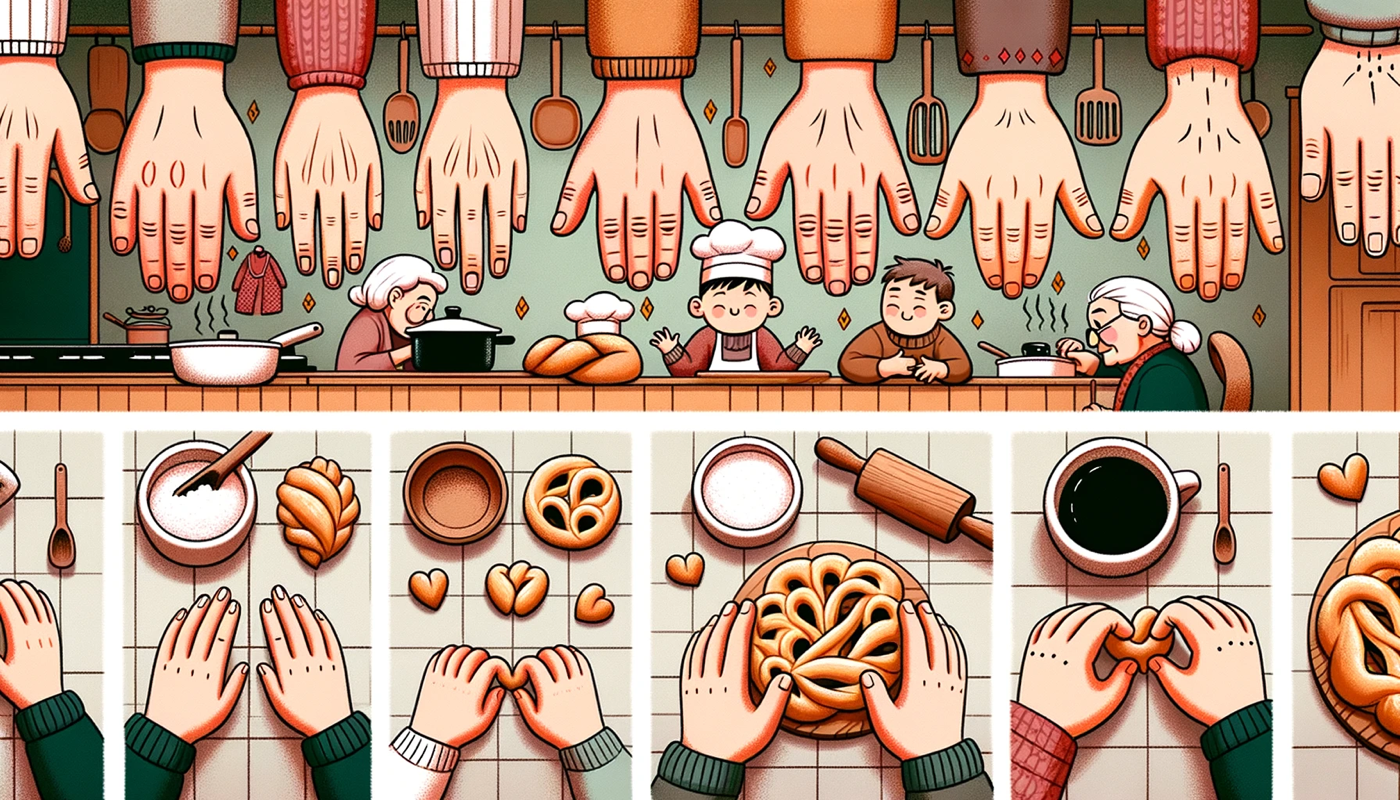
DALL·E 3 output — a hardened failed burek beside still-smooth, unblemished hands
Paragraph 6
My hands began to read like a list of failed ventures — until I found volleyball. Volleyball seemed like a forbidden interest, so independent from family. But each purposeful movement left me satiated with fulfillment. I picked up the game quickly, and my parents were thrilled: Recruitment was my ticket into a top university. I even fractured my thumb while diving for the ball, the bone awkwardly jutting out as my own personal talisman of greater purpose.
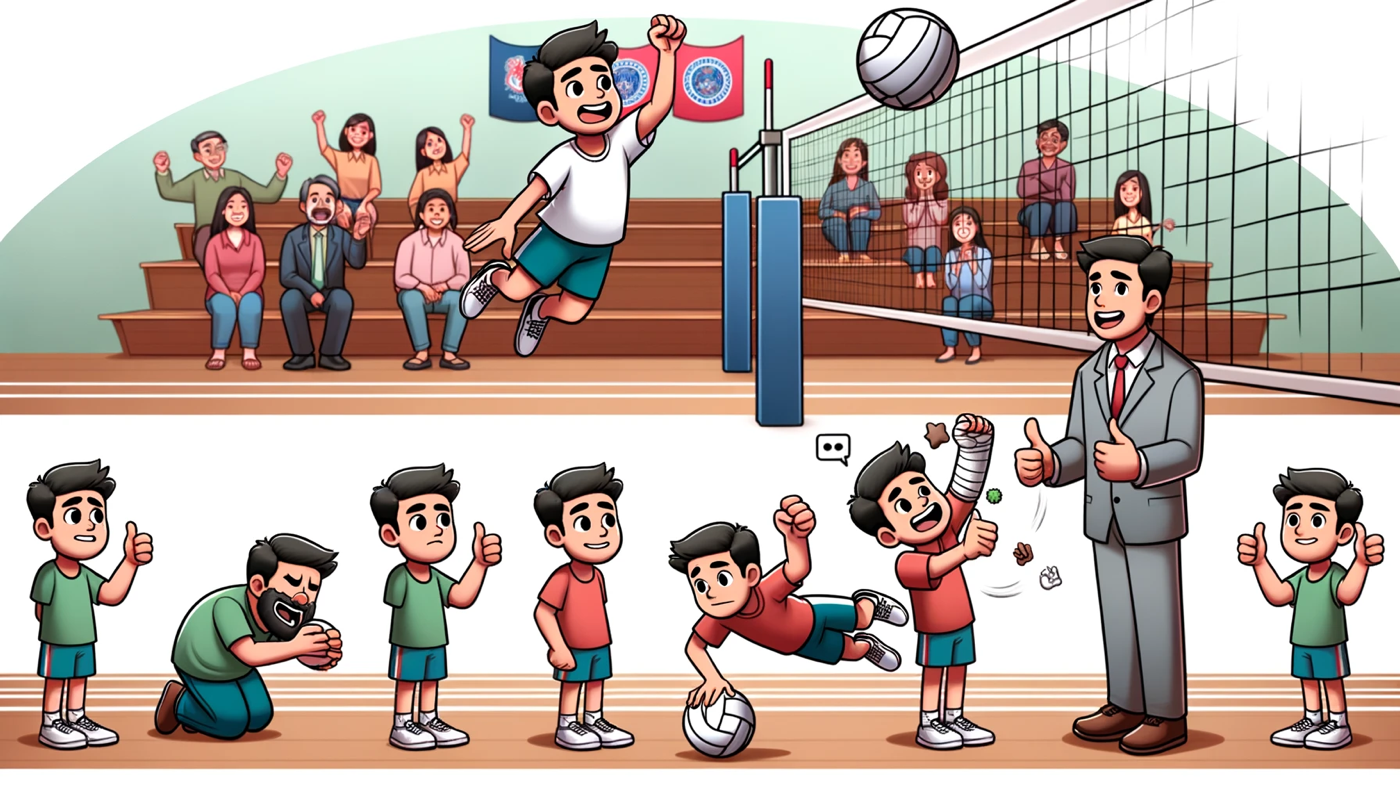
DALL·E 3 output — diving for the ball, the fractured thumb jutting out as a mark earned
Paragraph 7
But during high school, I was exposed to a plethora of other opportunities. I began spending Monday nights practicing cases for Mock Trial and dedicated weekends to taking photographs for my school's Dynamo literary magazine. And though my hands remained unchanged, these passions, along with others, showed me sides of my identity that I didn't know existed. But with little time left for volleyball, I came to the decision to leave my club team. My crooked thumb became an ominous reminder of another failed pursuit.
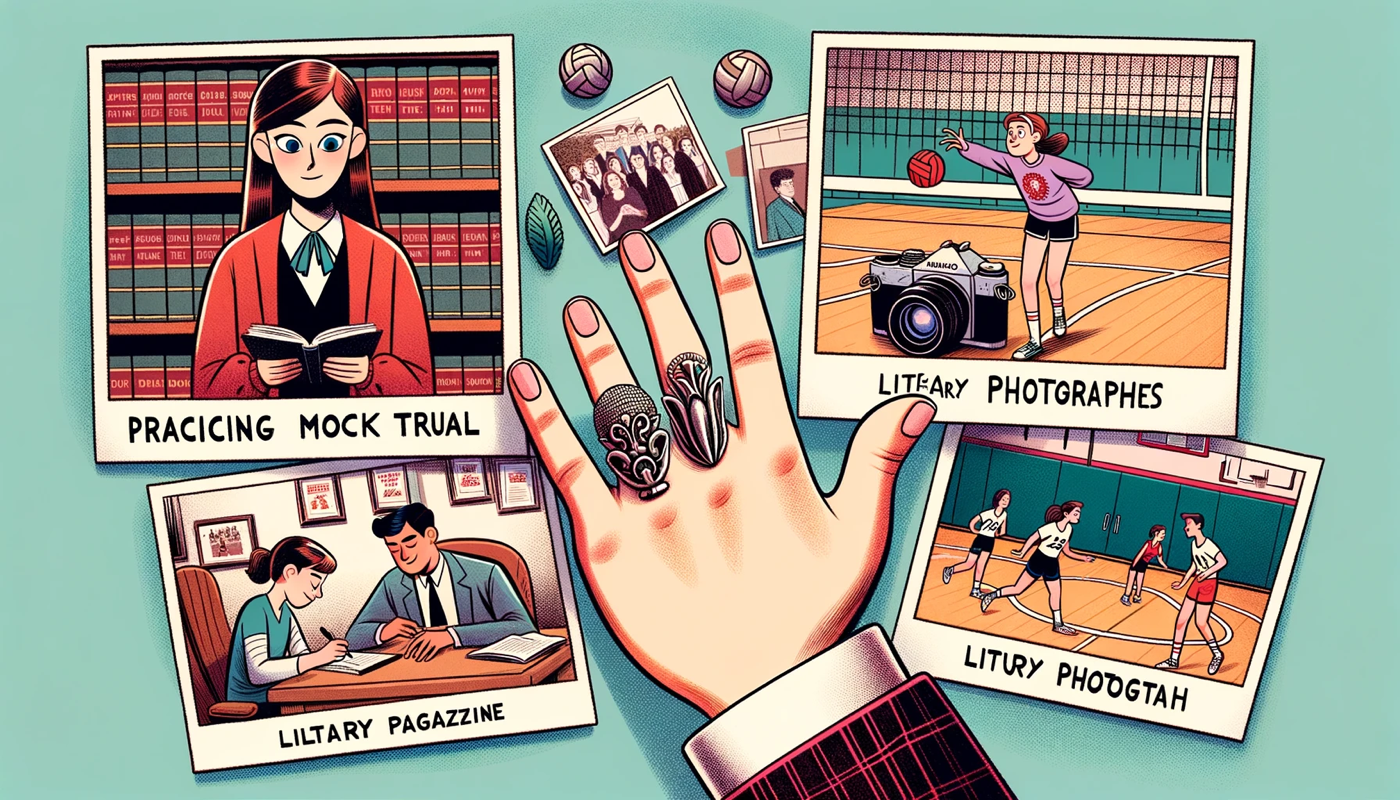
DALL·E 3 output — hands at a mock trial lectern, then behind a camera lens
Paragraph 8
My parents were furious. They perceived my new activities as unfocused distractions, leading me away from my ticket to college. I soon understood that my parents' anger did not stem from disappointment, but from unfamiliarity. Their only path forward was committing to their available roles, never pondering the existential questions I did: self-discovery in a sea of options.
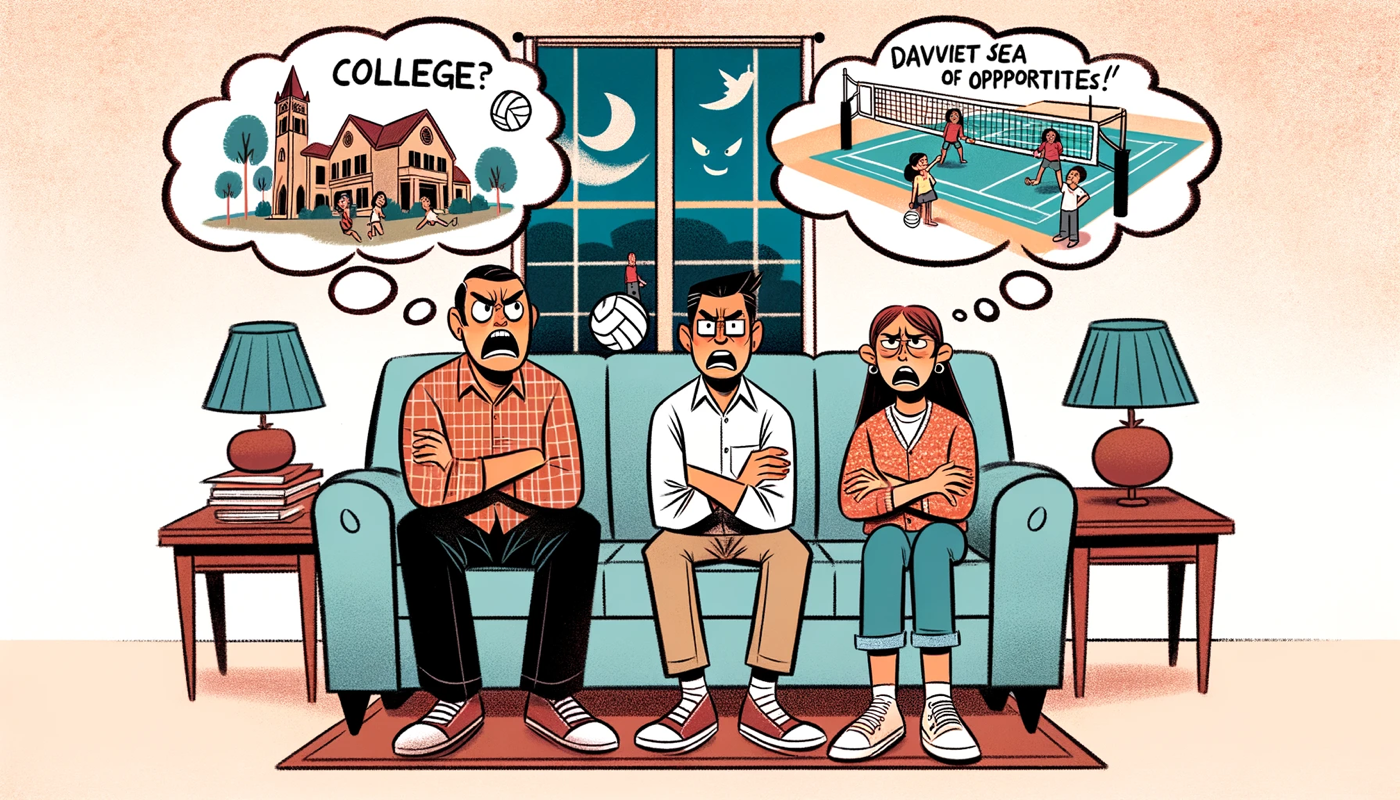
DALL·E 3 output — parents frowning, the writer standing apart — a family at an impasse
Paragraph 9
Becoming "lost" for pursuing seemingly unconnected interests was not what they envisioned for me, but I realized that the best way to fully take advantage of my privileges was to explore all my curiosities. I stopped emulating the identities of my family and realized that my hands would eventually bear the weight of my pursuits. More importantly, those markings and hands will be my own, not my mother's or father's.
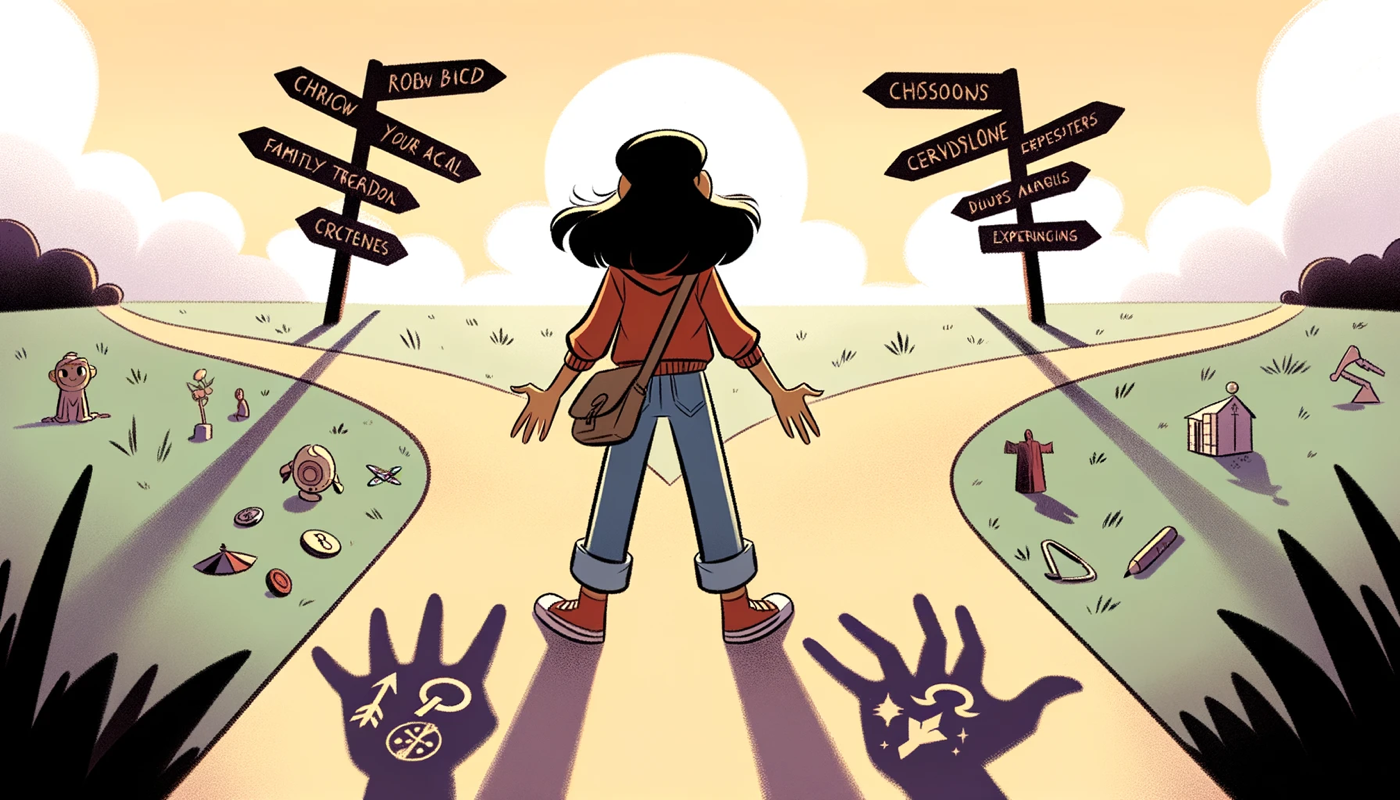
DALL·E 3 output — the writer's own hands, beginning to carry their story
What this test tells you
The "Hands" essay works because every paragraph delivers concrete visual information: the flour-and-burn-scar pattern on Grandma's skin, the tile-nicked calluses on Dad's palm, the thumb bone jutting after a volleyball dive. DALL·E 3 can render every one of them. That is not a coincidence — it is why admissions officers remember the essay.
Most students who struggle with their essays are not short of stories. They are too abstract, too summary-heavy. "I learned resilience from this experience" — DALL·E 3 cannot illustrate that sentence, and neither can the officer reading it. Visual specificity is a reliable self-check. If the image is generic, the prose is generic. Revise until the pictures are vivid.